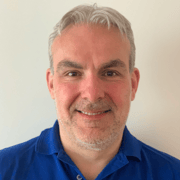
Huib Schoots
Consultant & coach Quality Engineering and Testing
Track and time: Track 1 at 08.10-09.00
Session type: Keynote
About the speaker: Huib Schoots is a leading expert in software quality and testing, with a deep fascination for mindset, thinking, behavior, collaboration, and quality. He strongly believes that personal leadership and team dynamics are essential for success in the workplace. His mission is to develop people and thereby deliver excellent software quality through connecting, innovating, coaching, and inspiring. Huib works as a consultant in Quality Engineering and Testing at Sogeti. He also is a regular event organizer. With extensive national and international experience in various roles, Huib helps individuals, teams, and organizations improve software quality through consultancy, coaching, training, and change management. He is on of the five Rapid Software Testing trainers worldwide and enjoys sharing his knowledge through presentations and workshops. Actively involved in various communities, he is always looking for new challenges.
In addition to his professional activities, Huib enjoys spending time with friends, his dog, playing board and computer games, LEGO, photography, brewing beer, traveling, and reading.
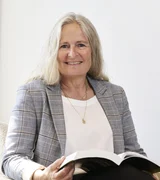
Gitte Ottosen
Chief advisor, ISTQB/TMAP trainer & CO-owner Key2quality
Track and time: Track 1 at 12.30-13.15
Session type: Keynote
About the speaker: Gitte Ottosen is a test manager and quality coach with a strong focus on a value driven approach to software development. She has 30 years of experience in IT, primarily within test, test management and process improvement, in both traditional and agile contexts. She is focusing on supporting a quality mindset across teams and organizations in Denmark. As a self-confessed test and agile evangelist who preaches the need for a strong quality and value driven focus, Gitte is a strong advocate for a context-driven approach, a role requiring profound professional insight, passion, and persistence—qualities that she holds in abundance. Gitte is a dedicated trainer within the areas of agile and test and is a regular speaker at international conferences. She is a trained Master coach, and also holds several certificates within testing as well as agile: ISTQB Expert Level Test Management – Full, Certified agile tester (CAT), TMap Test Engineer, TMAP Organizing Built-in Quality at Scale, Certified SCRUM Master, SAFe Program Consultant.

Vernon Richards
Track and time: Track 1 at 16.00-16.45
Session type: Key speaker
Recommended for: Testers and quality engineers at all levels. No specific technical prerequisites. This talk is for anyone who has ever struggled to explain what they do to a stakeholder, a hiring manager, or a budget holder. Especially relevant for those feeling the pressure of AI-driven changes in their organisations and wondering how to position themselves.
About the speaker: Vernon Richards is a Testing Strategist and Quality Coach who helps tech teams release with confidence and supports testers in becoming trusted partners and technical leaders. He´s been testing since 2002 and coaching since 2017.
By day, he´s a Senior Engineering Manager at a localisation tech company. By night, he consults, teaches, and creates content leadership, quality engineering, and entrepreneurship. He co-authored The Software Tester´s Journey, co-hosts The Vernon Richard Show, and writes on The Invisible Work blog. A regular speaker and host at conferences worldwide, he´s also Will Smith´s virtual stund double (allegedly).

Martin Enthed
VP Labs / Physicl | Keynote Speaker on 3D and Spatial Computing/AI | ex IKEA 18 years | ex Khronos VP 5 years
Track and time: Track 1 at 09.30-10.30
Session type: Presentation
Recommended for: Anyone interested in the future of AI, robotics, digital twins, and how we define and test data quality when transitioning from human perception to machine learning.
About the speaker: Martin Enthed is a pioneering leader in spatial computing, 3D visualization, and Physical AI, currently serving as the Vice President of Labs at Physicl.
At Physicl, Martin focuses on the fusion of 3D and AI, developing training grounds for Robotics and "World Models" that allow artificial intelligence to understand and reason within physical spaces.
With a career spanning over three decades in computer graphics, he is best known for his transformative 18-year tenure at IKEA, where he served as innovation manager and head of the IKEA Spatial Computing Lab. During his time at IKEA, Martin was instrumental in bridging the gap between traditional retail and the digital frontier. He led the transition from physical photography to large-scale, photorealistic 3D imagery and spearheaded groundbreaking initiatives in AR, VR, and mixed reality efforts. Beyond his corporate roles, Martin is a staunch advocate for open industry standards. He served as Vice President of The Khronos Group for 5 years and has played key roles in the Metaverse Standards Forum and the Alliance for OpenUSD (AOUSD). As a frequent keynote speaker and industry mentor, he remains at the forefront of the next revolution in digital intelligence and spatial reasoning.
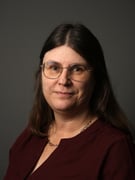
Eva Holmquist
Technical Lead Quality Engineering & Testing at Combitech / Author of Science Fiction and Fantasy Novels
Track and time: Track 1 at 10.30-11.30
Session type: Presentation
Recommended for: Testers, Junior level and Senior level who want to get some inspiration and knowledge about testing AI systems.
About the speaker: Eva Holmquist holds a Master of Science in Computer Science and Engineering and is a senior consultant with 30+ years of experience in software development, software testing, change management, and business process improvement. She is a specialist in testing and quality assurance from strategy to implementation and skills enhancement. She developed Sweden's first ISTQB basic training course and is the author of “Practical Software Testing” (1st edition 2018, 2nd edition 2026). Eva manages complex projects, methods and business process improvement, and coaches project- and test managers. In recent years, she has also focused on quality assurance of AI systems using robust and practical working methods.

Torvald Mårtensson
PhD, Technical Fellow at Saab Aeronautics
Track and time: Track 2 at 13.15-14.15
Session type: Presentation
Recommended for: Software developers, testers, QA leads, project managers and release managers
About the speaker: Torvald Mårtensson is Technical Fellow within System Integration Testing at Saab Aeronautics. Torvald is also Associate Professor of Software Engineering (Senior Lecturer and Docent) at Linköping University, and is a Senior Associate Editor of the Journal of Systems and Software. He is a full member of The Royal Aeronautical Society in London.
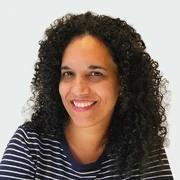
Luisa Escalona
Software Engineer | Workshop facilitator | Speaker
Track and time: Track 3 at 09.30-10.30
Session type: Presentation
Recommended for: Beginner and up. Developers, Testers and Managers
About the speaker: With nearly 18 years in the software industry, Luisa has evolved from being passionate about writing great code to focusing on building and nurturing high-performing teams. A Certified Encouragement Consultant and Empowering People in the Workplace Facilitator, she brings together deep technical expertise and a talent for fostering human-centered growth.
Since 2019 Luisa has delivered engaging talks and hands-on workshops that inspire teams and individuals to achieve their full potential. Her unique approach empowers organizations to drive both technological innovation and positive, sustainable change through collaboration and impactful leadership.

Ludvig Pettersson
Agile Lead | Scrum Master | Team Glue Guy
Track and time: Track 3 at 10.30-11.30
Session type: Presentation
Recommended for: This session is designed for anyone who feels drained by boring routines, uninspiring meetings, or work environments that lack energy and connection.
About the speaker: Ludvig Pettersson is an experienced Agile Lead, Scrum Master, and transformation coach with over 25 years in IT and organizational development. Over the past 13 years, he has coached more than 20 teams and supported large-scale agile transformations across industries including banking, digital product development, and global manufacturing. He has held senior agile roles at IKEA, Tetra Pak, and Ikano Bank, where he has driven agile maturity and coached leaders and Scrum master’s in modern ways of working. He is certified in Scrum and SAFe and has also trained organizations in psychological safety, conflict handling and agile leadership.

Elin Perttu
Empowering People Leading Change | Leadership Development | Training & Facilitation | Keynote & Guest Speaking
Track and time: Track 2 at 09.30-11.30
Session type: Workshop
Recommended for:
About the speaker: Elin Perttu has extensive experience facilitating and supporting executive teams, leaders and organizations. She has worked for over 20 years as a change leader, organizational development consultant, and within HR. She also facilitets a leadership program for women in the Öresund region.
She holds a degree in Behavioral Science from Lund University, including a Master´s degree in Adult Learning in the workplace. Her academic background also covers sociology and psychology. Elin frequently delivers lectures and workshops on topics such as change, learning, leadership, and organizational development. This marks her third time leading a workshop at Testit.

Jan Riis Sørensen
Test Manager at Testhuset A/S
Track and time: Track 1 at 13.15-14.15
Session type: Joint Presentation
Recommended for: Anyone involved in test reporting and metrics who wants to ensure their data reflects reality, and those interested in practical governance and how AI can reduce the maintenance burden of QA processes.
About the speaker: Jan presents this session together with Bo Dresler. Jan has almost two decades of testing experience in both manual testing, automated testing (UI) and test management (since 2008). Contributor and co-author of test policies and strategies and participant in TPI assessments, suggesting and implementing test process improvements.
Bo Dresler
Test Manager at Testhuset A/S
Bo presents this session together with Jan Riis Sørensen. Bo brings over 20 years of experience in test management across diverse industries in both the private and public sectors. He is passionate about exploring new technologies and advancing testing practices within the contexts he works. As a regular attendee of EuroSTAR, Bo highly values discussions, knowledge-sharing, and professional collaboration.
-3.png?width=180&height=180&name=image%20(16)-3.png)
Sigurdur Birgisson
Quality Leader at Inter IKEA IPEX
Track and time: Track 2 at 15.00-16.00
Session type: Joint presentation
Recommended for: Anyone wanting to move from reactive bug-fixing to proactive quality-by-design, especially those leading autonomous teams or working with complex interactive front-ends and AI-assisted test automation.
About the speaker: Sigurdur and Nikola will hold a joint presentation on how to leverage AI in test automation. Sigge Birgisson is the Quality Leader for IKEA´s range experiences (REX). He drives quality strategies across all products; enabling development teams to deliver high-quality software. With a background at both product companies and as a consultant, he coaches development teams in building quality in from the start, rather than trying to test and fix things after the fact. As a speaker, he has presented at several international conferences including Agile, CAST, Agile Testing Days, and Nordic Testing Days.
Nikola Pantić
Lead Software Engineer
Session type: Joint presentation
About the speaker: Nikola and Sigurdur will hold a joint presentation. Nikola Pantić is a Lead Software Engineer at Inter IKEA, with a decade of web development experience spanning interactive 3D tools and building the foundations that let engineers work with confidence. He came to software after leaving video production - a craft where feedback is slow, expensive, and often too late. In software, tests are his answer to that - because to him, code is just a temporary manifestation of expected behaviour, and you can´t define that behaviour until you understand it well enough to test it. He has spoken at internal conferences and public events, and organised coding competitions.

Alistair Spalding
Product owner & project leader in digital product development and eCommerce.
Track and time: Track 1 at 15.00-16.00
Session type: Presentation with case study and demo
Recommended for: QA engineers and test leads. Developers working with frontend or full-stack systems, Tech leads / architects, Product owners interested in quality and delivery speed. This is a no code solution that is suitable for anyone with even limited understanding of testing concepts and modern development workflows.
About the speaker: Alistair Spalding is a Senior Project Leader at the Knowit office in Oslo. He has 15 years experience as a product owner and project leader in digital product development, specialising in eCommerce.

Maria Kedemo
Specialist generalist ☆ Agile enthusiast ☆ Specialist in Testing and Quality ☆ Coach ☆ Change Catalyst ☆ Workshop facilitator ☆ Speaker
Track and time: Track 3 at 13.15-14.15 & 15.00-16.00
Session type: Workshop
Recommended for:
About the speaker: